Back to work

02 — Consumer Goods · B2B

Digital
Transformation

The LEGO Group is one of the world's most recognisable brands — a privately held Danish company founded in 1932, selling construction toys across more than 130 countries.

The LEGO Group — 2023

Consumer Goods · Toys & Play · Retail

Digital Product Designer

Partner APIs · Design Strategy

B2B Partner Ecosystem · Cross-team Alignment

Owned by KIRKBI A/S (75%) and the LEGO Foundation (25%), LEGO operates manufacturing facilities across Europe, Asia, and the Americas, with new factories under construction in Vietnam and the United States.

In 2024, LEGO reported record revenue of DKK 74.3 billion — a 13% increase year-on-year — with an operating profit of DKK 18.7 billion and net profit of DKK 13.8 billion. The company employs over 31,000 people globally and launched its largest-ever product portfolio of 840 sets.

Beyond physical product, LEGO has made substantial investments in digital infrastructure, sustainability, and B2B partner ecosystems — including API-driven integrations for third-party retailers and distributors, and internal platform capabilities to support a growing global network of commercial partners.

My Role & Responsibilities

Partner Ecosystem Designer

LEGO Design Roadmap

Challenge

LEGO's commercial landscape was shifting — and the organisation needed to digitise fast. Five core problems were driving the change: fragmented e-com content, low product availability forecasting, limited trade investment transparency, misaligned global sales processes, and confidentiality gaps in the selling-in process.

The strategic response was a B2B digital ecosystem — enabling seamless collaboration, data-driven decision-making, and efficient retail execution. The goal was an interconnected set of products across three office locations in Billund, Copenhagen, and London, covering partner collaboration, retail execution, and content distribution.

Solution

My focus was on structural challenges: identifying gaps, aligning teams, and connecting design decisions across multiple product areas. Building personal trust on behalf of my team and expertise was central to making that work — across stakeholders and developers to bring clarity to a complex product landscape.

Public link

Process

01 — Opening hook

First week at the LEGO Group, I won the Partner Hackathon 2023 with a team I'd never met before 🏆 — 88 participants, including 10 designers, 59 engineers, and 10 product managers, tackling real partner challenges over 2 days offsite.

#JustImagine #BehindTheBricks #ComeAndPlay

Partner Hackathon 2023 LEGO People House

02 — The challenge

As a designer embedded in the Partner space, the challenge was understanding a highly complex domain quickly, identifying where I could add the most value, and staying aligned across multiple teams moving in parallel.

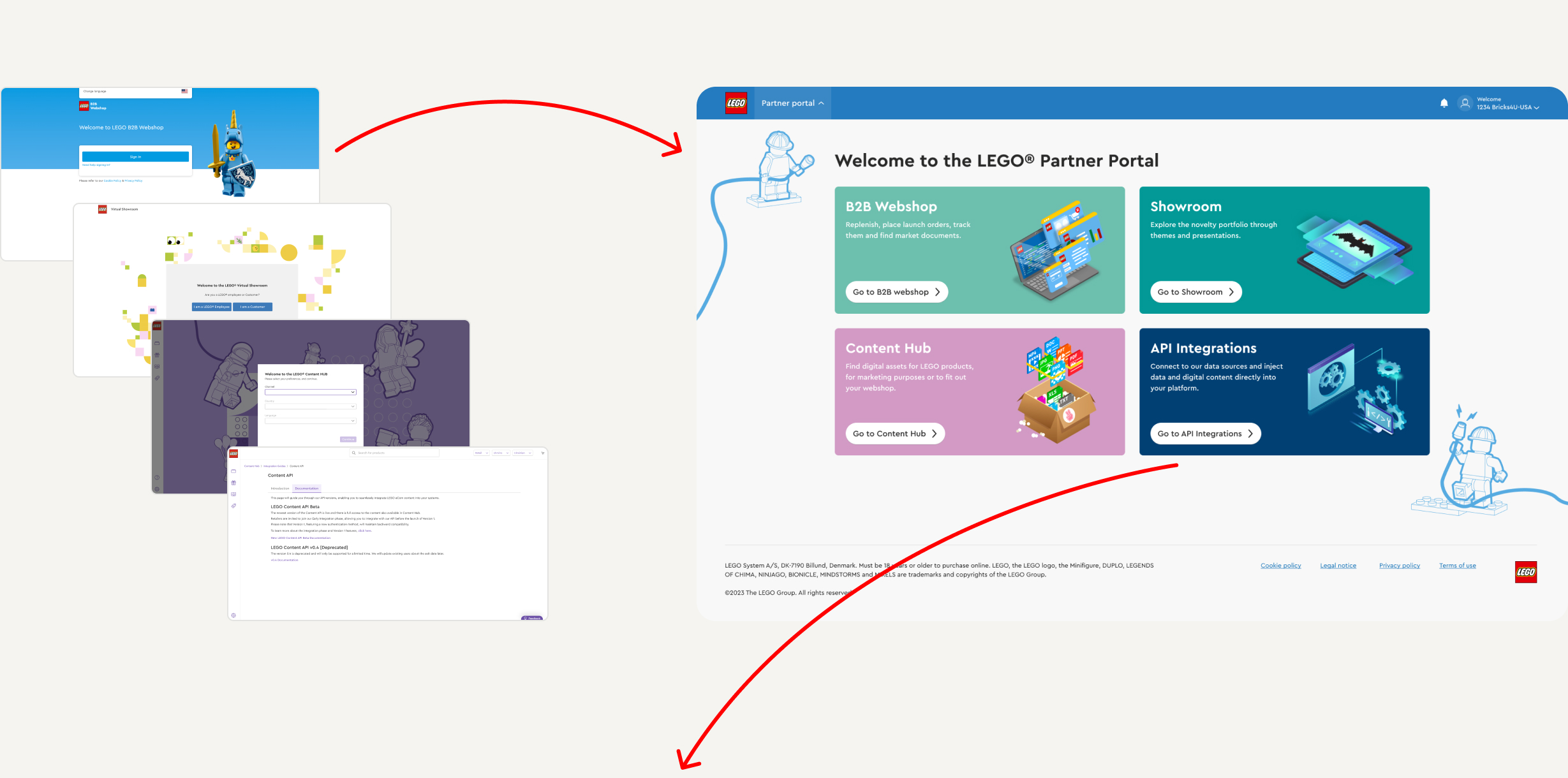
Partner Portal, Developer Portal and supporting surfaces

03 — The hackathon solution

Our team proposed a unified API layer enabling real-time product asset tracking and audit across all B2B e-commerce touchpoints — one source of truth for every partner interaction. At Showtime, all 8 teams presented to a wider company audience, each chasing the B2B department's north star. It was a rare moment of cross-team visibility: ideas on the table, priorities openly discussed, alignment built in real time.

Hackathon solution — unified API layer proposal

04 — The lasting impact

The APIs initiative had legs well beyond the event — it sparked ongoing conversations across the internal and external API ecosystem and evolved into a cross-organizational engineering initiative focused on developer experience and API infrastructure.

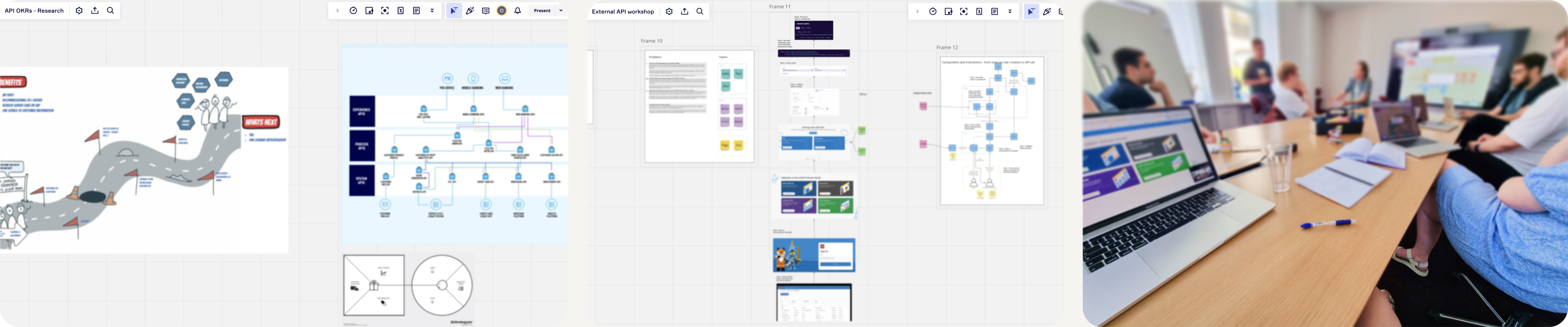
Cross-org API initiative and workshop artifacts

05 — My ongoing contribution

Together with my engineer teammate, I helped initiate a series of workshops across e-commerce and Partner departments to build an "API product portfolio" ecosystem — improving how we deliver multilingual content, pricing, and ads across partner channels. We established an ongoing API development process with internal teams to collect pain points, scope implementation, align with company goals, and prioritize within the 3-5 year strategy.

Showtime presentation — problem, approaches and architecture

Key Outcomes

API Integration

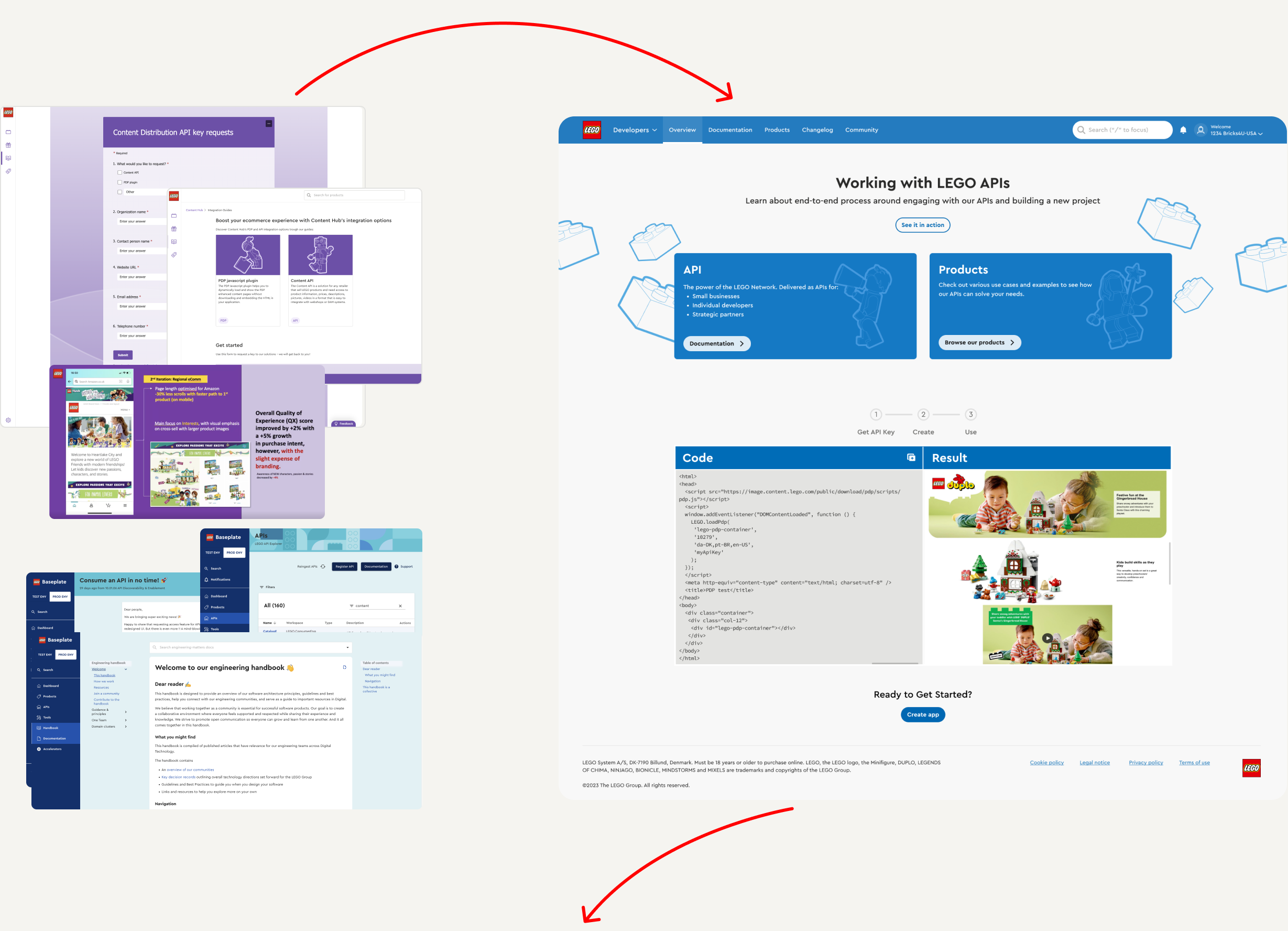
Initiated the integration of external APIs into the Partner Portal as a strategic move toward a seamless B2B experience. Ran cross-team workshops to align on timing and dependencies — resulting in 5–6 teams working from coordinated roadmaps, consistent API development stages, and tighter collaboration with internal API teams.

Architecture

Drove the decision to move external APIs under the Partner Portal umbrella, away from Virtual Showroom. The owning team kept full ownership; Partner Portal took responsibility for delivery oversight and service continuity — a structural shift that made the ecosystem more coherent for both partners and internal staff.

Impact

The partner tools built during this period remain central to how LEGO manages B2B relationships today.

Previous project Inpay
Next project Speedperform