Process
01 — Discovery & foundations
Inpay's first B2C product — a category and design-language shift for a company built on B2B fintech, entering the iGaming sector where players expect instant deposits, 24/7 availability, and zero friction at checkout. Mapped the cross-border payment landscape: friction points, regulatory and KYC dependencies on local banks, and the constraints of the third-party providers we'd integrate with. Defined what "trusted, frictionless, and safe" had to mean for an end consumer who'd never used the brand before.
With the team, I designed and built a mobile prototype before the brand existed — and it travelled with the sales team to a partner conference in Barcelona. The product story and the design thinking did the persuading: existing partners signed on to deliver the real product.
02 — Closed-loop architecture
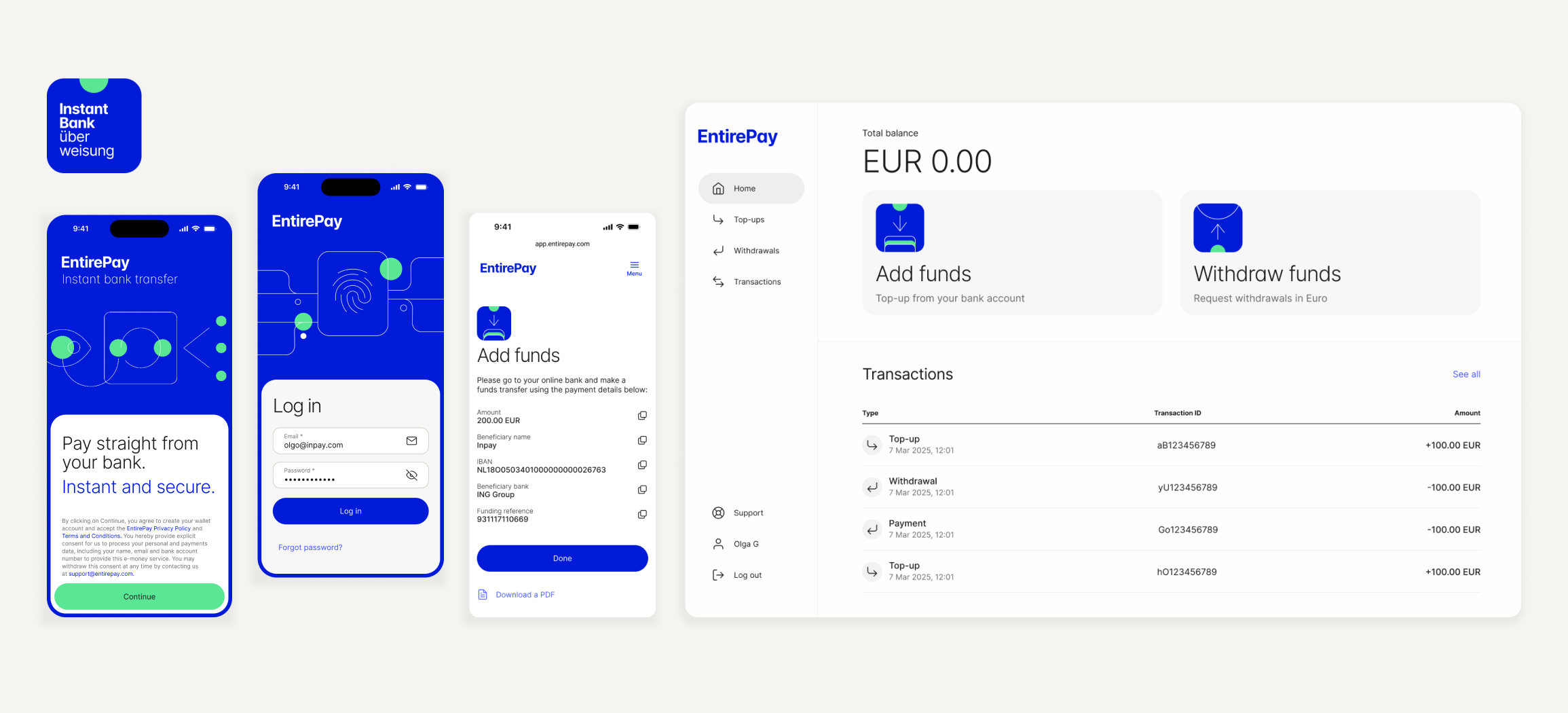
Strategic combination of a pay-in payment method with a collection-account capability — designed to deliver instant collection (under 10 seconds via the Open Banking layer), 24/7 processing essential for deposit flows, and the option to use the collected balance for later payouts.
The seamless wallet creation happens inside the same flow — no separate signup step — turning what's normally two journeys into one.
The underlying order-lifecycle backend — how a payment moves through its states end-to-end — sits on the same payments platform documented in the Inpay for Developers case study.
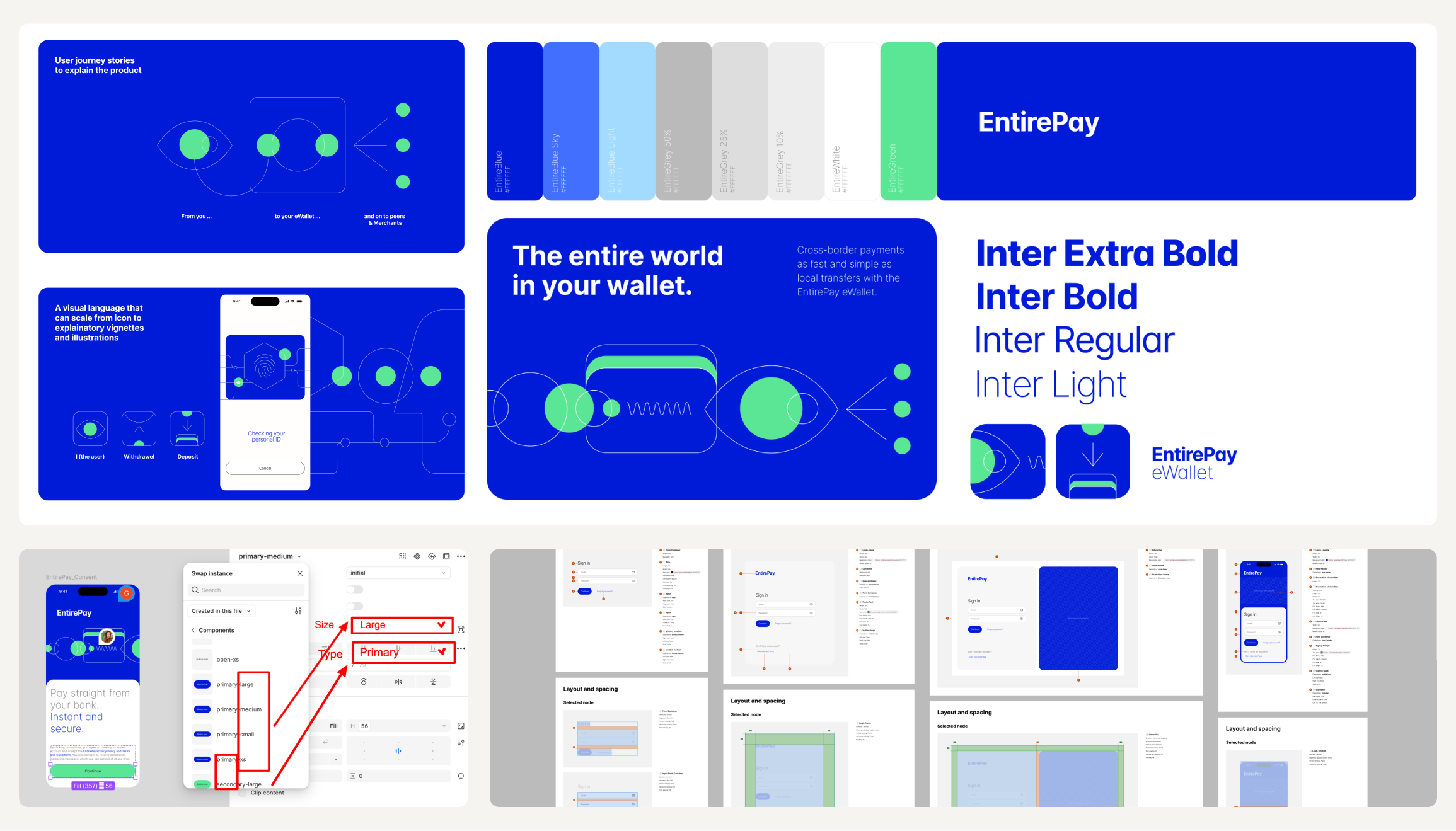
In parallel, partnered with an external brand agency to shape the EntirePay brand identity — sitting alongside Inpay in the wider portfolio. Brought the design lens from the product side into the brand work to keep both surfaces coherent and consistent.
03 — Tiered user journeys & progressive KYC
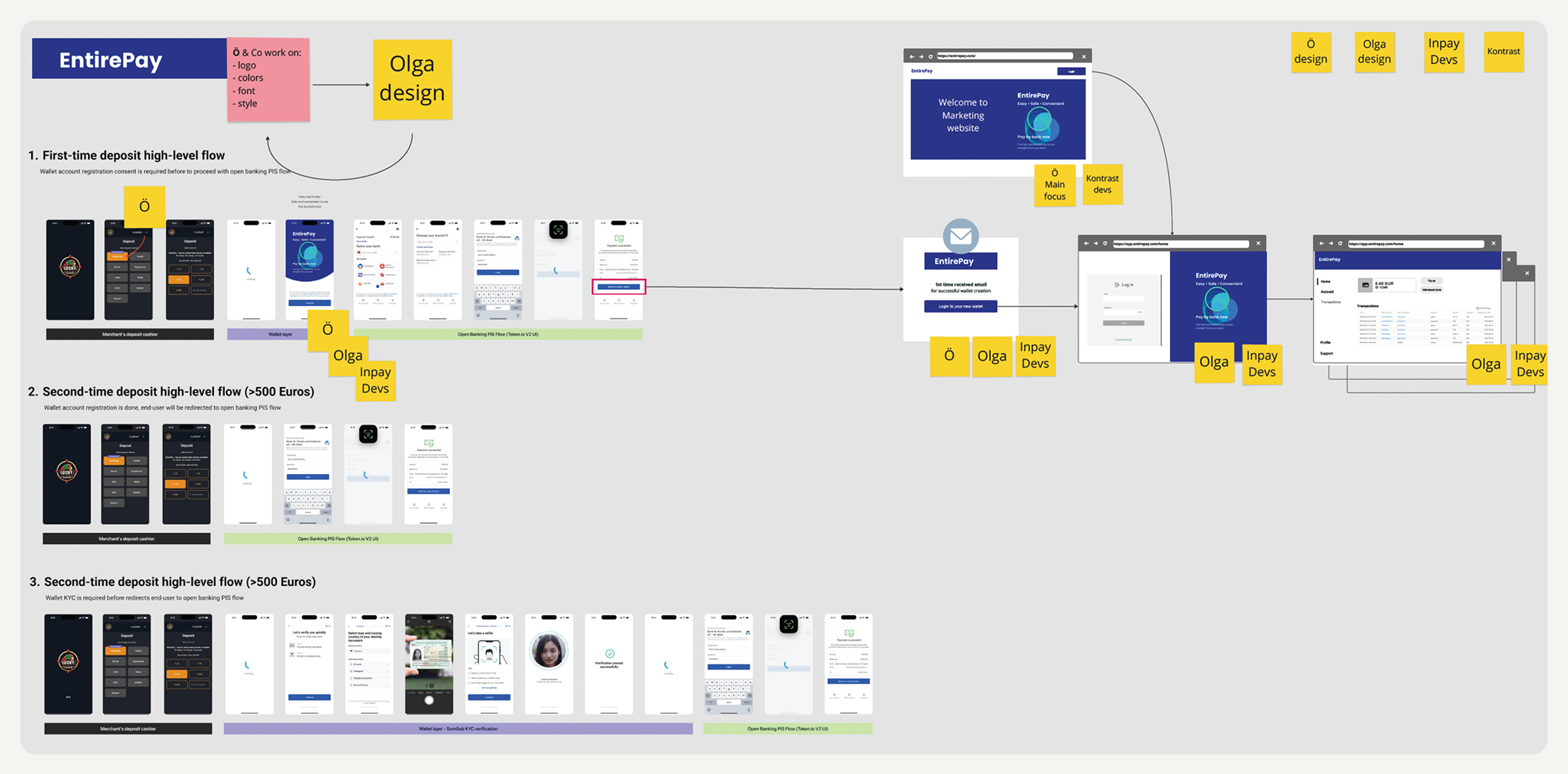
Designed three end-to-end journeys that balance compliance with conversion:
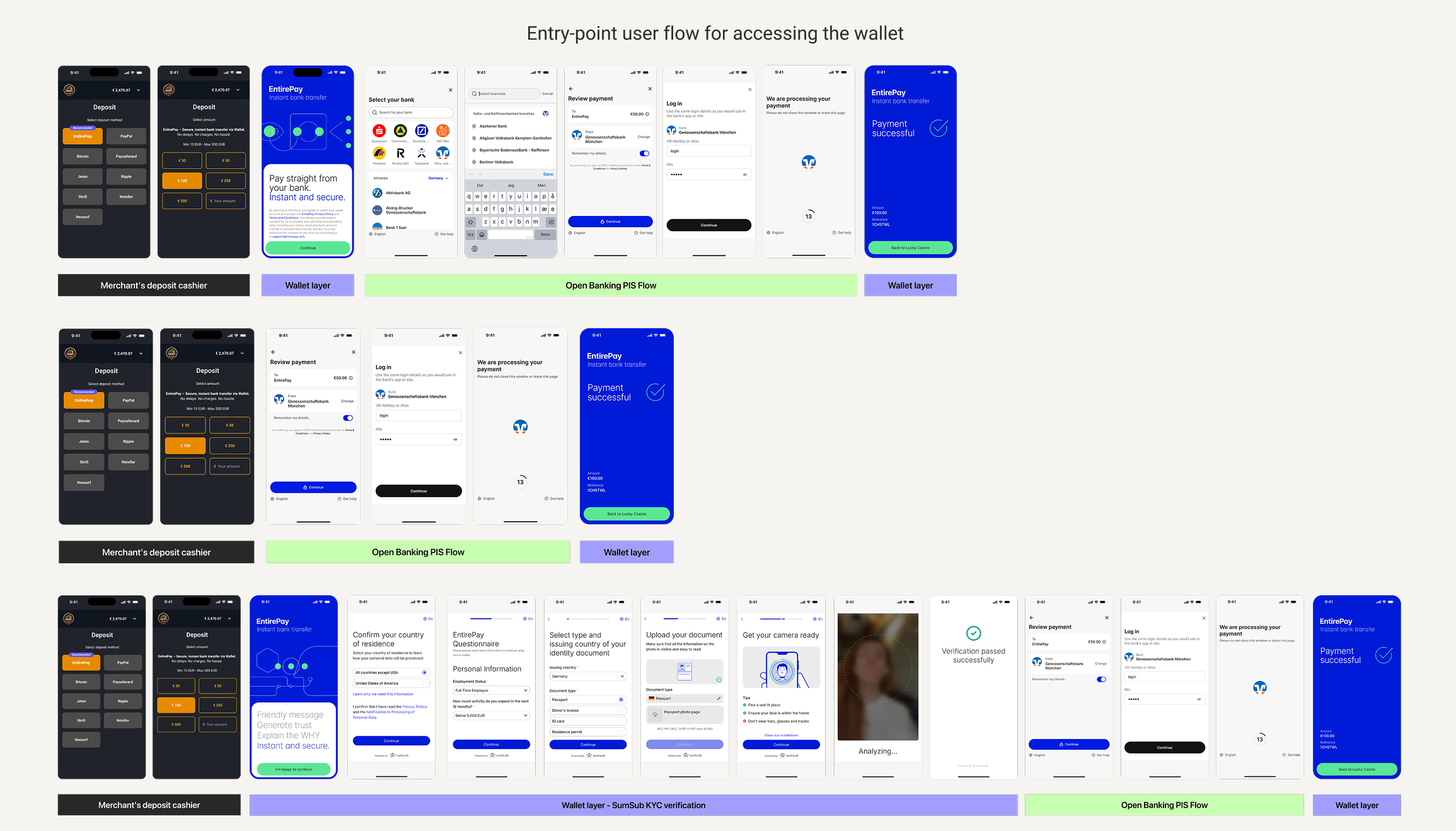
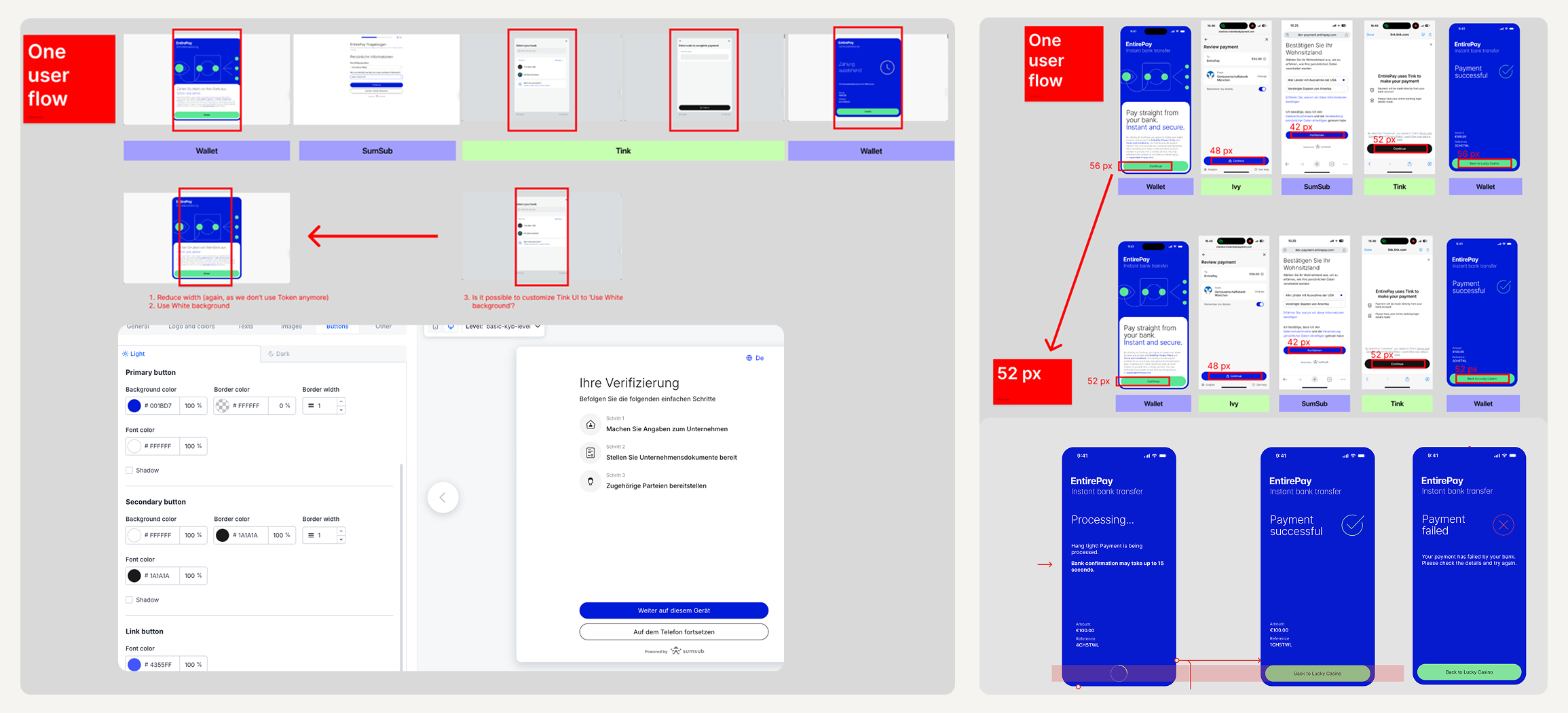
— First-time deposit: instant bank transfer with seamless wallet creation, minimal KYC (name, DOB, country, email).
— Returning low-value (under €500 or first 3 transactions): pre-selected bank, simplified path, fewer steps.
— High-value threshold reached: full KYC via SumSub (ID document, liveness check, geo localisation, employment + spending profile) — averaging 50-second approval for 98% of cases in Germany.
The tiered model is the design contract that lets a regulated product feel as light as possible at every stage of trust.
04 — Prototype, alignment, market entry
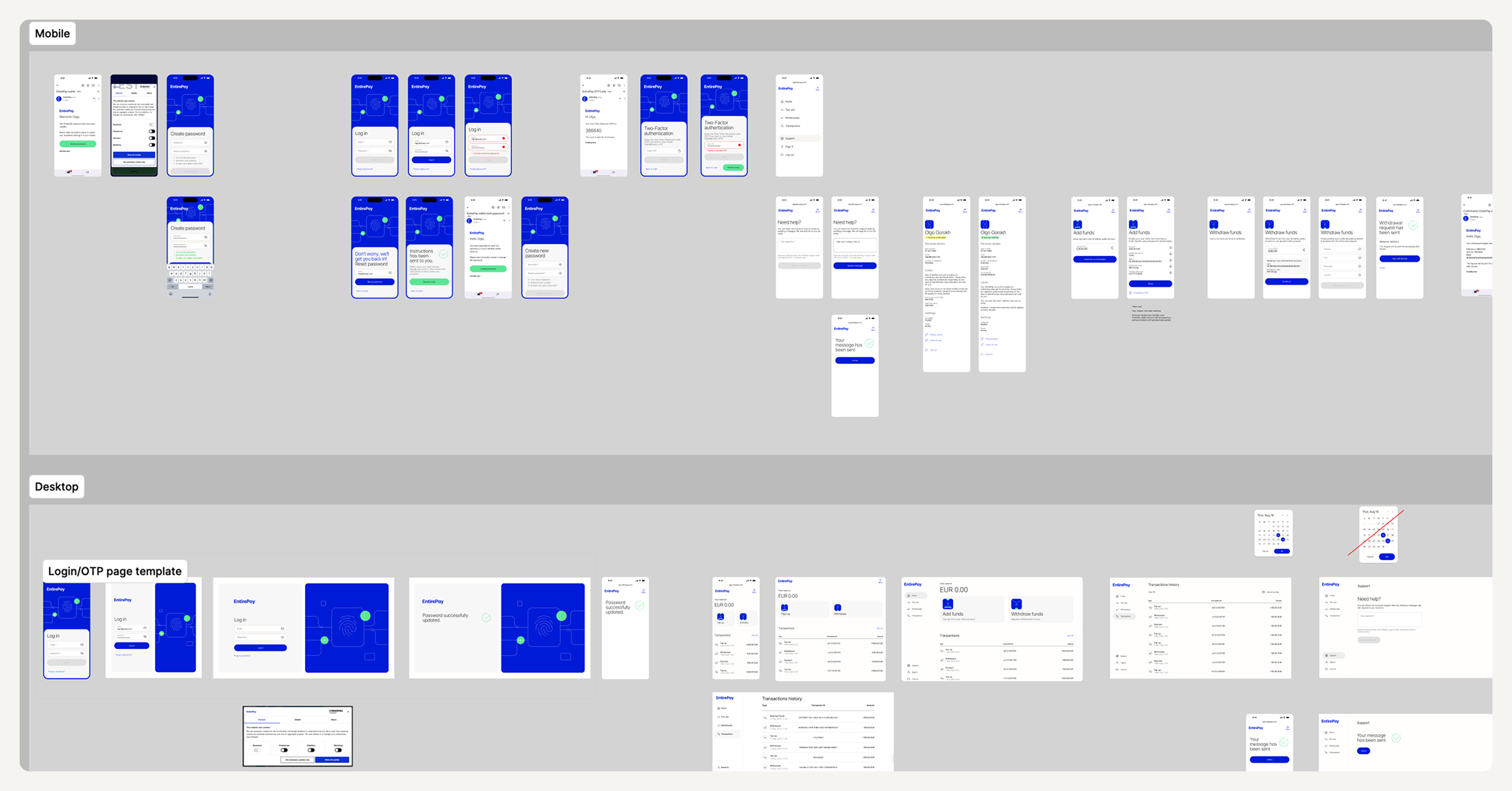
Delivered an end-user prototype and a video walkthrough — equipping the internal sales team to present the product to partner operators, drive engagement, and secure buy-in ahead of launch. In parallel, drove rapid feature delivery in the technically constrained internal Admin tool, partnering across squads to unblock the operational surface the consumer product depended on.
First customer onboarded in Germany — validating the integration model, the closed-loop infrastructure, and the end-to-end consumer flow, and unlocking the company's entry into a new market.